

Why Flexible Packaging Is Transforming Manufacturing and Supply Chains in 2026
As manufacturers continue to navigate rising freight costs, supply chain disruptions, and increasing sustainability expectations, one packaging solution is gaining significant momentum across industries: flexible packaging.
Once primarily associated with consumer goods and food products, flexible packaging has become an increasingly important solution for industrial manufacturers, medical suppliers, pet food producers, and specialty chemical companies. Companies are realizing that packaging is no longer just a means of shipping products. It is a strategic tool that can improve operational efficiency, reduce costs, and support long-term sustainability initiatives.
The growth of flexible packaging is not a temporary trend. It reflects a fundamental shift in how businesses think about transportation, storage, automation, and environmental responsibility.

What Is Flexible Packaging?
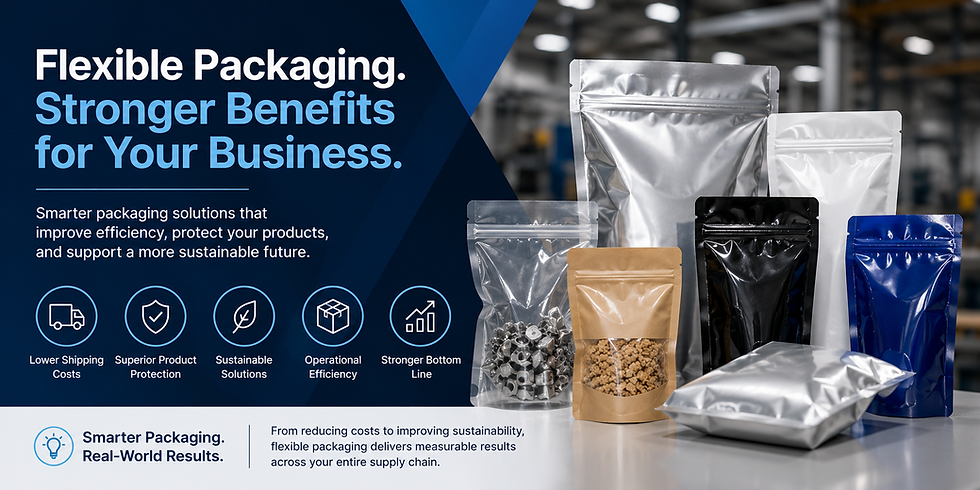
Flexible packaging refers to packaging made from materials that can easily change shape, including films, pouches, bags, wraps, liners, and rollstock packaging. Unlike rigid containers, flexible packaging uses less material while still providing product protection, barrier performance, and operational efficiency.
Today, flexible packaging is widely used for:
Medical and pharmaceutical packaging
Pet food packaging
Hazardous material packaging
Industrial packaging applications
Food and beverage packaging
Protective packaging solutions
Specialty chemical packaging
Its versatility has made it one of the fastest-growing segments of the global packaging industry.
Why Flexible Packaging Is Growing So Quickly
Several factors are driving the increased demand for flexible packaging solutions in 2026.
Rising Transportation Costs
Shipping costs continue to put pressure on manufacturers and distributors. Every pound of packaging material affects freight expenses, fuel consumption, and shipping efficiency.
Flexible packaging offers a major advantage because it is significantly lighter than many rigid alternatives. Lower package weights allow companies to:
Reduce freight costs
Increase shipment capacity
Improve pallet efficiency
Lower transportation expenses
Decrease fuel usage
For manufacturers shipping thousands of products each year, even small reductions in packaging weight can create substantial cost savings.
Greater Supply Chain Efficiency
Supply chain optimization remains one of the most discussed topics in manufacturing and logistics. Companies are looking for ways to improve operations without sacrificing product protection.
Flexible packaging supports these goals by allowing businesses to:
Store more packaging inventory in less space
Increase warehouse efficiency
Simplify transportation and handling
Improve packaging line productivity
Reduce material waste
As warehouse costs continue to increase, efficient use of storage space has become more important than ever.
Sustainability Is Driving Packaging Decisions
Sustainable packaging continues to be one of the most searched topics in the packaging industry.
Manufacturers are facing increasing pressure from customers, regulators, and corporate environmental initiatives to reduce their environmental footprint. Flexible packaging often aligns with these objectives because it generally requires fewer raw materials and less energy to transport.
Many companies are actively searching for:
Sustainable packaging solutions
Recyclable flexible packaging
Eco-friendly packaging materials
Lightweight packaging solutions
Packaging waste reduction strategies
The packaging industry is also seeing increased innovation in mono-material packaging, recyclable films, and advanced barrier technologies that help improve sustainability performance.
While sustainability goals vary by industry, the desire to reduce material usage and improve efficiency is influencing packaging decisions across the board.
Flexible Packaging and Automation
Automation has become another major driver behind the growth of flexible packaging.
Manufacturers are increasingly investing in high-speed production equipment and automated packaging lines. These systems require packaging materials that can run consistently, minimize downtime, and support efficient production processes.
Custom flexible packaging solutions can be designed to:
Improve machine performance
Increase production speeds
Reduce packaging inconsistencies
Minimize material waste
Support high-volume manufacturing environments
Rollstock packaging in particular has become increasingly valuable for manufacturers seeking to improve packaging automation and operational efficiency.
As labor shortages continue to impact manufacturing facilities, automation-friendly packaging solutions are becoming even more important.
Why Flexible Packaging Works for Industrial Applications
One of the biggest misconceptions about flexible packaging is that it is only suitable for consumer products.
In reality, industrial manufacturers are increasingly adopting flexible packaging solutions because of their adaptability and performance capabilities.
Applications include:
Medical and Pharmaceutical Packaging
Flexible packaging can provide barrier protection, cleanliness, and efficient storage for medical products and devices.
Hazardous Material Packaging
Certain flexible packaging systems are designed to meet stringent transportation requirements while improving handling efficiency.
Protective Packaging
Films, bags, liners, and cushioning materials help protect products from moisture, contamination, and surface damage.
Pet Food Packaging
Flexible packaging offers excellent barrier performance and efficient transportation while supporting branding and shelf appeal.
Industrial Components
Custom flexible packaging solutions can help protect parts, reduce material use, and improve logistics efficiency.
As supply chains become more complex, manufacturers increasingly recognize that packaging solutions must balance protection, efficiency, and cost control.
The Future of Flexible Packaging
Industry experts expect flexible packaging demand to continue growing over the coming years.
Some of the most important trends include:
Smart packaging technologies
Recyclable packaging materials
Advanced barrier films
Lightweight industrial packaging
Sustainable packaging innovations
Automated packaging systems
Supply chain optimization through packaging design
Packaging is no longer viewed simply as a shipping necessity. It has become an essential part of operational strategy.
The companies that gain a competitive advantage are often those that understand how packaging decisions influence transportation costs, production efficiency, customer satisfaction, and sustainability performance.
Flexible packaging is transforming manufacturing and supply chains because it addresses some of the most pressing challenges businesses face today. Rising freight costs, warehouse constraints, sustainability goals, and increasing automation demands are all driving companies to rethink their packaging strategies.
When properly designed, flexible packaging can help manufacturers improve efficiency, reduce costs, optimize logistics, and support long-term business objectives.
As packaging technologies continue to evolve, flexible packaging will likely play an even greater role in helping manufacturers build smarter, more resilient, and more efficient supply chains.
For organizations evaluating ways to improve packaging performance and operational efficiency, understanding the strategic advantages of flexible packaging may be one of the most important packaging decisions they make in the years ahead.


Comments