

Why More Manufacturers Are Choosing Flexible Packaging Solutions
Flexible packaging is no longer viewed as an alternative packaging method. Across manufacturing, logistics, food processing, industrial materials, and consumer goods industries, it has become a strategic solution for companies focused on efficiency, product protection, and long-term cost control.
As supply chains become more demanding and transportation costs continue to rise, businesses are reevaluating how packaging impacts operations beyond simply containing a product. Packaging now affects freight costs, warehouse utilization, sustainability goals, shelf life, and overall customer experience.
For many manufacturers, flexible packaging is helping solve multiple operational challenges at once.
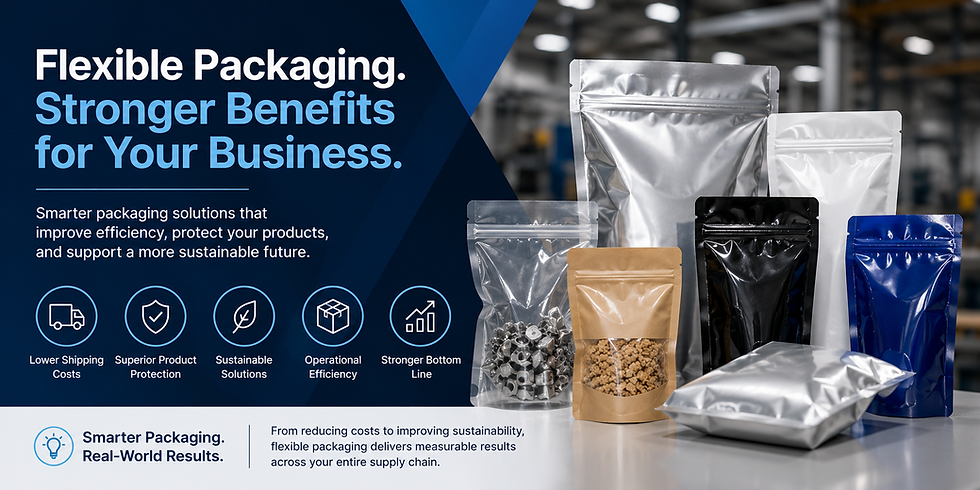
What Is Flexible Packaging?
Flexible packaging refers to packaging materials that can easily change shape while maintaining strength, durability, and product protection. These materials commonly include:
Flexible films
Laminates
Foil structures
Polyethylene materials
Multi-layer barrier packaging
Resealable pouches
Industrial packaging films
Unlike rigid containers, flexible packaging is lightweight, adaptable, and designed to optimize transportation and storage efficiency while still protecting the integrity of the product inside.
Today, flexible packaging is used across industries including:
Food and beverage
Medical and pharmaceutical
Industrial manufacturing
Automotive
Agriculture
Chemical products
Consumer packaged goods
Electronics
Lower Transportation and Freight Costs
One of the biggest advantages of flexible packaging is its ability to reduce shipping expenses.
Because flexible materials weigh significantly less than rigid alternatives, manufacturers can often lower:
Freight costs
Dimensional weight charges
Fuel consumption
Pallet weight
Transportation emissions
In large-scale operations, even small reductions in packaging weight can translate into significant annual savings.
Flexible packaging also reduces unused space during shipping and warehousing. This allows businesses to:
Ship more products per load
Improve pallet efficiency
Reduce storage requirements
Increase warehouse capacity
As transportation costs continue to fluctuate, packaging efficiency has become an important part of operational planning.
Improved Product Protection
Modern flexible packaging is engineered to provide excellent barrier protection against:
Moisture
Oxygen
UV exposure
Contaminants
Odors
Temperature variation
Multi-layer film structures allow manufacturers to customize packaging based on the product’s exact requirements.
This is especially important for industries where product integrity directly impacts performance, safety, or shelf life.
For example:
Food manufacturers rely on barrier packaging to extend freshness
Industrial suppliers use protective films to prevent contamination
Medical packaging requires controlled environments and sterility
Chemical manufacturers need durable leak-resistant packaging systems
The right flexible packaging structure can help reduce product waste, spoilage, and damage throughout the supply chain.
Sustainability Is Driving Packaging Decisions
Sustainability is now influencing procurement and packaging decisions across nearly every industry.
Manufacturers are under increasing pressure to:
Reduce packaging waste
Lower carbon emissions
Improve recyclability
Meet sustainability mandates
Optimize material usage
Flexible packaging supports these goals by using fewer raw materials than many rigid alternatives.
Because the materials are lightweight, transportation also requires less fuel, helping companies reduce overall environmental impact.
In recent years, packaging innovation has expanded significantly in areas such as:
Recyclable mono-material packaging
Post-consumer recycled content
Lightweight packaging design
Reduced material consumption
Sustainable barrier technologies
Companies are increasingly looking for packaging partners that can help balance performance, protection, and sustainability without sacrificing efficiency.
Flexible Packaging Supports Operational Efficiency
Packaging affects far more than product presentation.
The right packaging system can improve:
Production line efficiency
Storage organization
Fulfillment speed
Inventory handling
Shipping workflows
Automation compatibility
Flexible packaging solutions are often easier to integrate into high-speed manufacturing environments because they are adaptable and designed for scalability.
For businesses operating in competitive industries, these operational advantages can create meaningful long-term savings.
Customization for Specialized Applications
Not all products require the same packaging structure.
One of the key strengths of flexible packaging is its versatility. Packaging can be engineered for specific applications including:
Heavy-duty industrial products
Sensitive electronic components
Temperature-sensitive materials
Food-grade applications
Protective cushioning systems
Moisture-sensitive products
Packaging engineers can adjust:
Film thickness
Barrier layers
Seal strength
Durability
Print capabilities
Storage performance
This allows manufacturers to create packaging systems tailored to their exact operational requirements.
Consumer Expectations Are Changing
Packaging is also becoming part of the customer experience.
Today’s buyers expect packaging that is:
Easy to open
Easy to store
Durable during shipping
Resealable when necessary
Visually professional
Environmentally responsible
Flexible packaging provides companies with opportunities to improve both functionality and brand perception while maintaining operational efficiency.
The Future of Flexible Packaging
The flexible packaging industry continues to evolve rapidly.
Emerging trends include:
Advanced recyclable materials
Smart packaging technology
Digital printing customization
Improved barrier performance
Sustainable material innovation
Lightweight high-strength films
As industries continue focusing on supply chain optimization and sustainability, flexible packaging will likely play an even larger role in modern manufacturing and distribution strategies.
Businesses that evaluate packaging as part of their overall operational efficiency strategy are often better positioned to reduce costs, improve logistics, and adapt to changing market demands.
Choosing the Right Packaging Partner
Flexible packaging is not a one-size-fits-all solution.
The most effective packaging strategies are developed around:
Product requirements
Shipping conditions
Storage environments
Sustainability goals
Production workflows
Cost considerations
Working with an experienced packaging partner helps ensure that materials, structure, and performance align with the realities of the application.
At LPS Industries, we help manufacturers evaluate packaging solutions designed around real operational needs, product protection requirements, and long-term efficiency goals.
If your team is evaluating flexible packaging options or looking to optimize existing packaging systems, our team can help identify solutions tailored to your application and supply chain requirements.


Comments